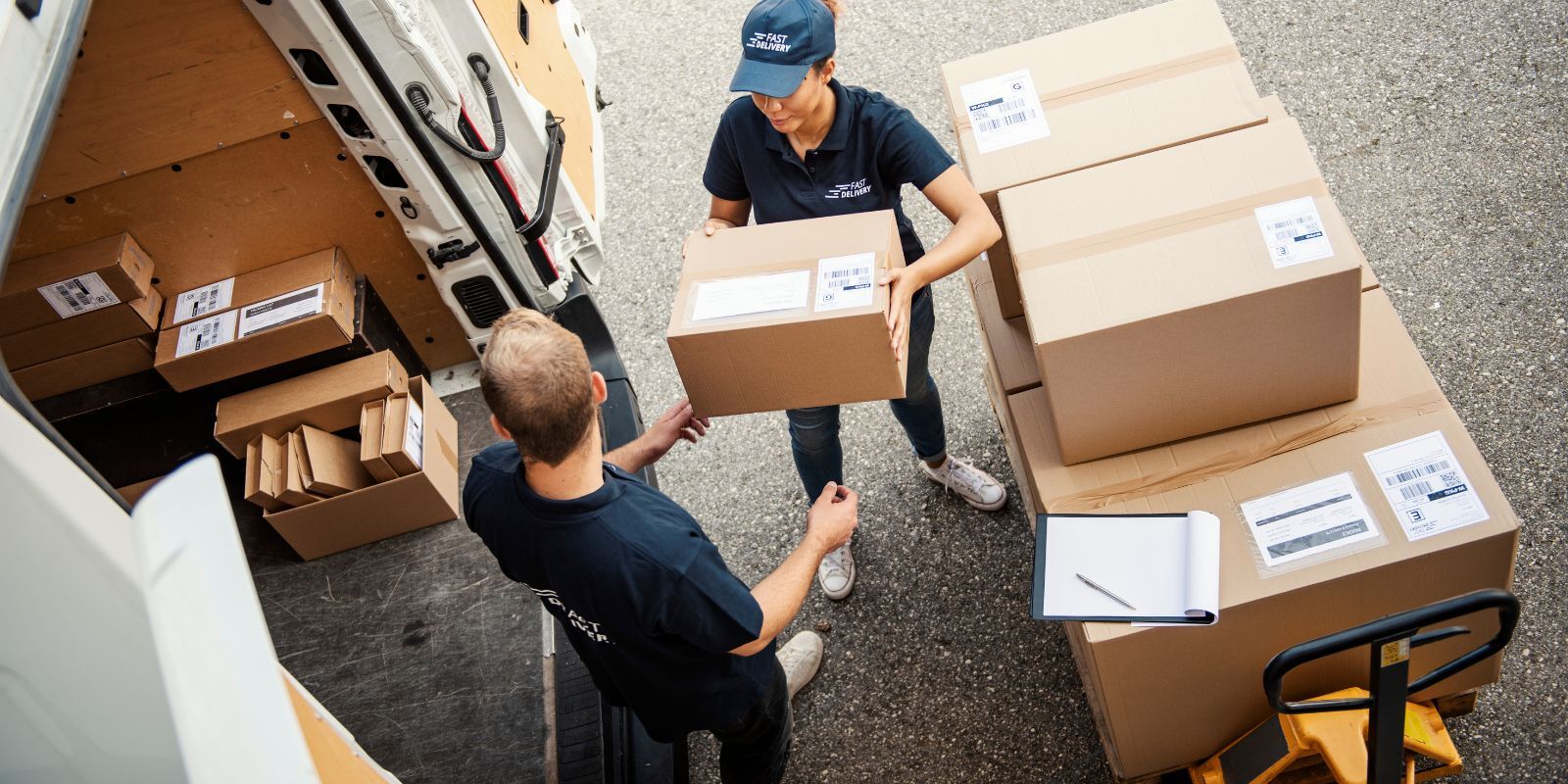
Fulfilling the delivery promise requires planning a feasible route, meeting the agreed delivery date and time, anticipating issues, and keeping the recipient informed. When any of these steps fails, failed deliveries, order status inquiries, and the costs associated with a second delivery attempt can increase, affecting the customer experience.
A transportation management system (TMS) helps connect planning with execution. By accounting for delivery time windows, vehicle capacity, service times, and priorities, teams can organize more realistic routes. During delivery operations, real-time fleet visibility makes it easier to identify deviations, manage incidents, and make decisions based on up-to-date information.
How Can You Improve On-Time Deliveries with Precise Time Windows?
Delivery time windows define the period during which a customer can receive an order. To meet them, logistics planning needs to account for the estimated duration of each stop, vehicle capacity, driving restrictions, priorities, and the time available during the workday, alongside the proximity of delivery addresses.
A TMS can incorporate these variables when building and assigning routes. Effective route optimization helps organize routes according to the constraints and needs of each delivery. During execution, real-time fleet visibility helps identify delays or deviations and prioritize deliveries that need attention. Estimated time of arrival (ETA) updates and proactive notifications also allow teams to communicate changes to recipients and manage expectations before a delay turns into a complaint.
How Can You Reduce Failed Deliveries and WISMO Inquiries?
Failed deliveries can result from incorrect addresses, recipients being unavailable, or deliveries arriving outside receiving hours. To prevent them, validate order details before dispatch and communicate the delivery status and estimated time of arrival (ETA) to customers through proactive notifications.
When a delivery cannot be completed, recording the reason and evidence through electronic proof of delivery (ePOD) helps identify recurring problems and define corrective actions. Keeping recipients informed about their order status can also reduce Where Is My Order? (WISMO) inquiries about the location or status of a delivery.
Analyzing incidents and last-mile performance indicators makes it possible to adjust planning and improve customer communication. More transparent logistics also makes inquiries easier to handle and contributes to a more satisfying delivery experience.
Friman Success Story: How to Reduce Delivery Complaints
When a delivery raises questions, having evidence of what happened can make a difference. With Descartes + Drivin, Friman reduced complaints by digitally documenting its deliveries.
“Having evidence of the delivery, with a signature and geolocation, has reduced complaints and misunderstandings.”
How Can You Reduce Route Planning Time?
As the number of orders, vehicles, time windows, and restrictions increases, manual planning can take up a large part of a logistics team’s day. Automated planning can organize deliveries by considering multiple variables, and some route-planning solutions have reported reductions of up to 75% in the time spent on this task.
To optimize planning, a TMS can help teams:
- Digitize order entry: Integrate, where appropriate, the systems that hold order information and reduce repetitive manual tasks.
- Account for operational constraints: Include addresses, delivery time windows, priorities, vehicle capacity, and service times before generating routes.
- Automate stop assignment and sequencing: Organize orders and routes while considering multiple constraints together.
- Compare planned routes with actual execution: Identify deviations, review service times, and find opportunities for improvement.
For operations with a high volume of orders, effective route optimization helps distribute orders among available vehicles, organize routes, and maintain operational control as demand grows.
Manual Planning vs. Planning with a TMS
Beyond the speed of building routes, operational effectiveness depends on connecting the plan with what happens in the field and using the results to improve the next day’s operations.
| Feature | Manual Planning | Planning with a TMS |
| Route preparation | Relies on manual calculations and data consolidation. | Automates assignment and considers multiple constraints at the same time. |
| Delivery time windows | Evaluating multiple constraints becomes harder as volume increases. | Allows delivery windows and service times to be included in route planning. |
| In-day operations | Information may be scattered, and deviations may be identified late. | Real-time fleet visibility helps identify deviations and prioritize action. |
| Failed deliveries | Analysis depends on records and reports collected afterward. | Capturing delivery outcomes and proof of delivery helps identify patterns |
| Continuous improvement | Comparing planned and actual performance may require manual work. | Operational indicators help assess performance and adjust planning. |
Improve Delivery Promise Performance with Descartes + Drivin
To understand whether delivery promises are being met, it is important to review indicators such as on-time performance, first-attempt delivery success, rejection reasons, and OTIF (On Time, In Full). Analyzing these metrics by area, customer, carrier, and type of operation helps identify where the main problems occur and how planning can be adjusted.
With Descartes + Drivin, companies can improve visibility and control over their logistics operations, make more informed decisions, and work toward more consistent delivery performance.